BTC IV Surface for Bitcoin Options
Traders searching for a BTC IV surface usually want more than a single ATM volatility print. They want to see how implied volatility is shaped across strikes and expiries, and whether that shape still lines up with the live Bitcoin options chain.
Read IV across strikes and expiries instead of relying on one headline number.
Compare front-end event pricing with farther-dated volatility structure.
Check whether downside or upside wings are carrying the richer premium.
Definition
How to read a BTC IV surface
A BTC IV surface shows how implied volatility changes across both strike and expiry. That matters because Bitcoin options rarely trade on a flat line. Short-dated event risk, deep OTM wings, and shifts in dealer positioning all leave a visible shape on the surface.
For practical trading, the surface is most useful when it is tied back to live chain rows. A nice-looking surface alone is not enough if the contracts behind it are stale, thin, or disconnected from where open interest is actually sitting.
Use Cases
Where a BTC IV surface helps
- -Check whether near-dated BTC volatility is bid into a known event.
- -Compare ATM levels with put and call wings instead of reading IV as one number.
- -Use surface shape together with open interest to see whether the market is leaning in one direction.
- -Move from a volatility read into the live Bitcoin chain without changing tools.
Platform View
What usually matters on the surface
Term structure first
Start by separating front-expiry pricing from the rest of the curve. A steep front end often says more about current positioning than a single spot IV quote.
Wing shape second
The distance between downside puts, ATM strikes, and upside calls helps show whether the market is paying more for protection or upside convexity.
Chain quality third
Surface analysis is stronger when you can cross-check the same expiries and strikes against visible quotes, open interest, and current chain activity.
Screenshot
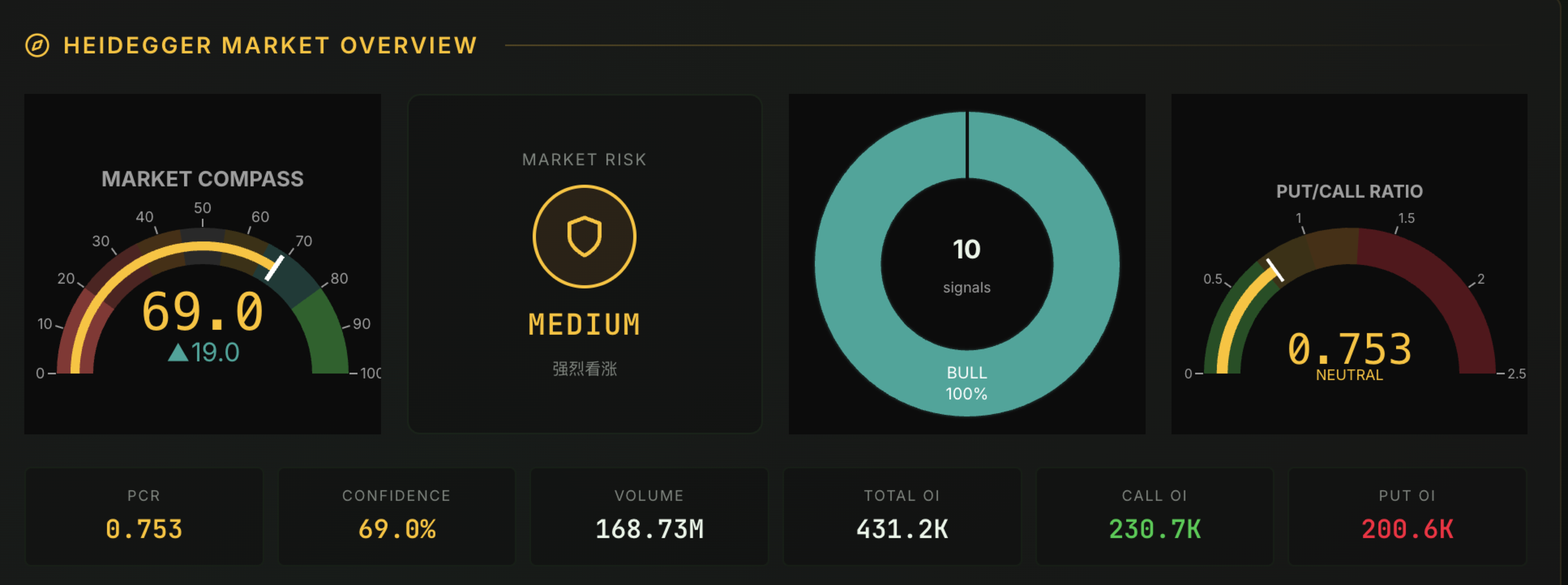
Use the live market page as a BTC IV surface workflow
The OIOption interface keeps strike, expiry, IV, and positioning close together, which makes the BTC IV surface easier to interpret in context rather than as a detached chart.
Data source and cadence
Public aggregated option-chain snapshots with source and row age exposed on the live market page.
Refresh cadence depends on upstream availability; each snapshot carries an observed timestamp.
Delayed or partial rows are research context only and are not execution quotes.
FAQ
Common questions
What is a BTC IV surface?
It is the implied volatility surface for Bitcoin options, showing how IV changes across strike and expiry instead of only at one maturity or one reference strike.
Why is a BTC IV surface better than a single ATM IV number?
A single ATM number hides term structure and wing pricing. The surface shows whether the market is steep, flat, bid for downside protection, or rich in a specific expiry bucket.
How does OIOption help with BTC IV surface analysis?
It puts IV next to strike rows, expiries, and open interest so the volatility surface can be read against the actual chain structure traders care about.
Related Pages
Keep the topic cluster connected
BTC options dashboard
The Bitcoin dashboard entry page for interface-oriented search intent.
BTC open interest
The positioning page focused on where Bitcoin contracts are concentrated.
Crypto options analytics
The broader analytics category page.
Options skew analysis
A related page focused on how wing pricing and directional bias should be read.
Next Step
Use surface search intent to bring in Bitcoin options traffic
The BTC IV surface page should answer the query clearly, then hand the visitor into the live market page where surface shape, skew, and chain rows can be checked together.